The five notes and the two that complete the scale
A minor pentatonic contains A, C, D, E, and G. A natural minor, also called A Aeolian, adds B and F. The shape becomes easier to understand when you can see exactly which two notes turn the pentatonic subset into the full seven-note scale.
Keep one physical position fixed
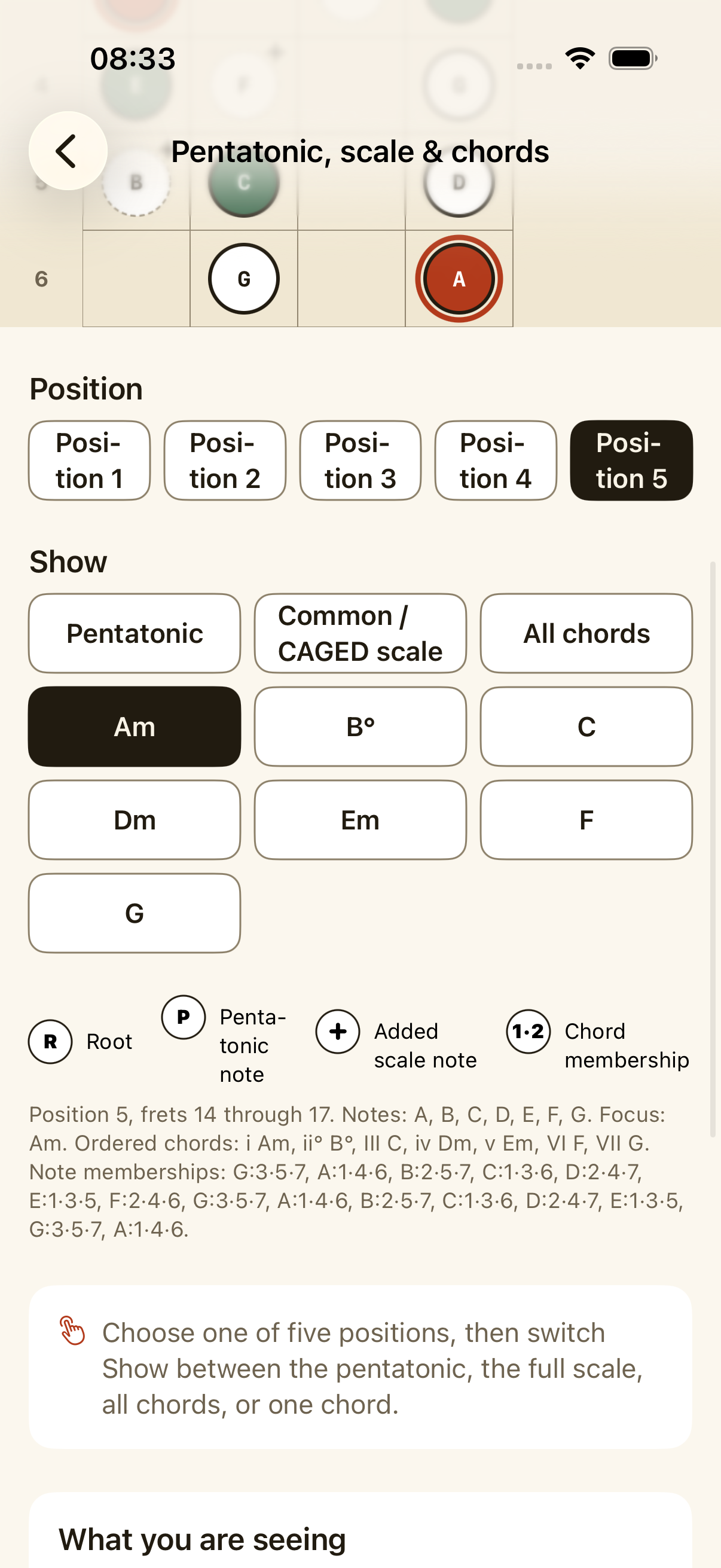
Changing the notes and moving the fretboard at the same time makes the comparison harder. Hold the window in place, reveal the pentatonic first, then add the complete scale and its chord tones.
- Open Learn, then Pentatonic, Scale & Chords.
- Choose Position 1 and show the pentatonic notes.
- Switch to Common/CAGED. B and F complete A Aeolian in the same window.
- Show all chords, then focus on Am, C, and Em one at a time.
- Move to Position 2 and repeat until you have covered all five positions.
Read chord tones as melodic targets
Am uses A, C, and E. C uses C, E, and G. Those notes already sit inside A minor pentatonic. Em adds B, which appears when you expand the view to the complete scale.
The markers identify chord tones inside the position. They do not promise a playable chord voicing. Use them as notes to land on while the harmony changes.
Practise the connection instead of the box
Loop a simple chord change and stay in one position. For each chord, find its root, third, or fifth nearby. Once that feels familiar, move to the next position without changing the key.